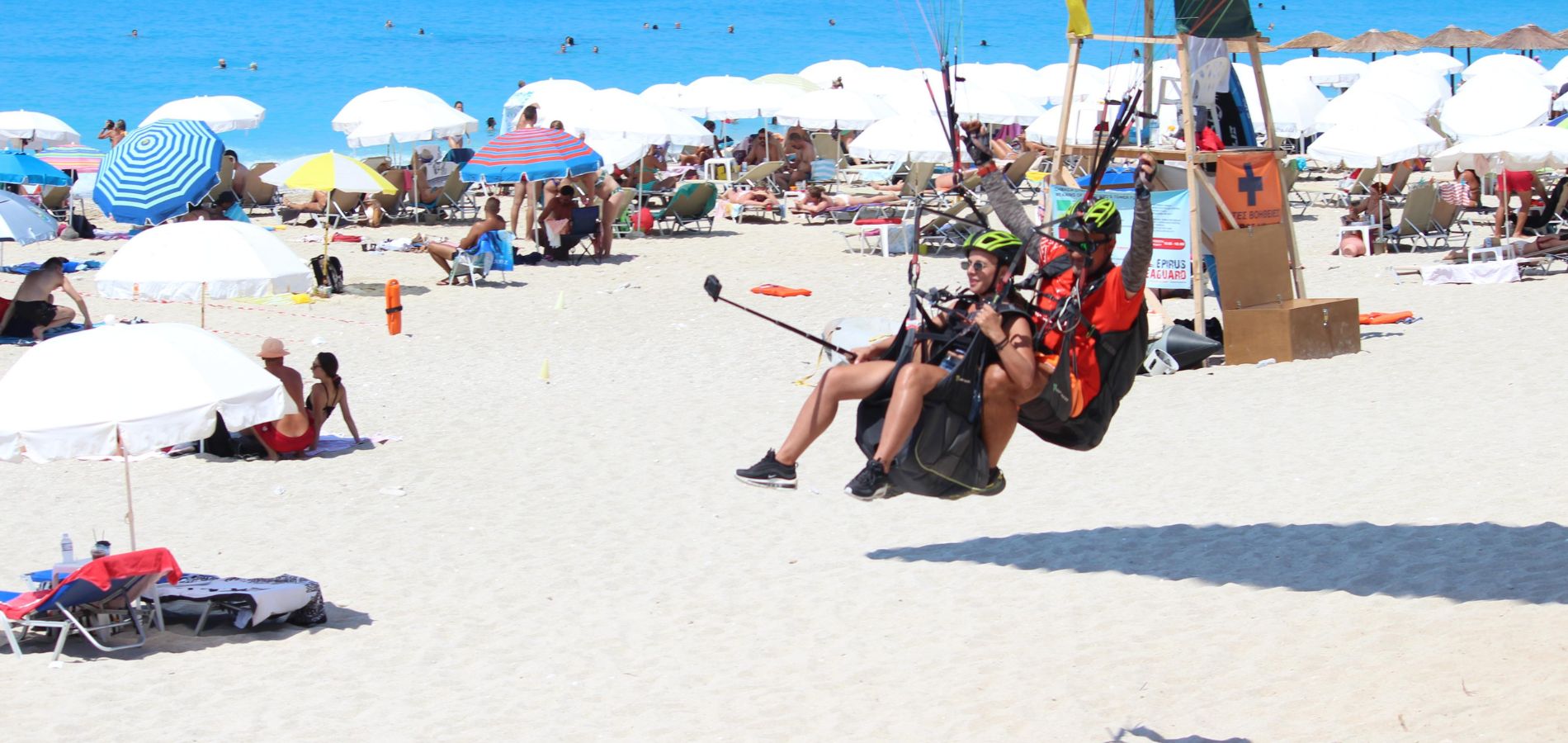


Lefkada stands out immediately because of its relationship with the sea. Official Greek tourism sources describe the island through its transparent turquoise waters, dramatic beaches, lush scenery, and strong Ionian character. Unlike many other islands, Lefkada is also connected to the mainland by a causeway and floating bridge, which makes it unusually easy to reach while still feeling unmistakably insular in mood and landscape.
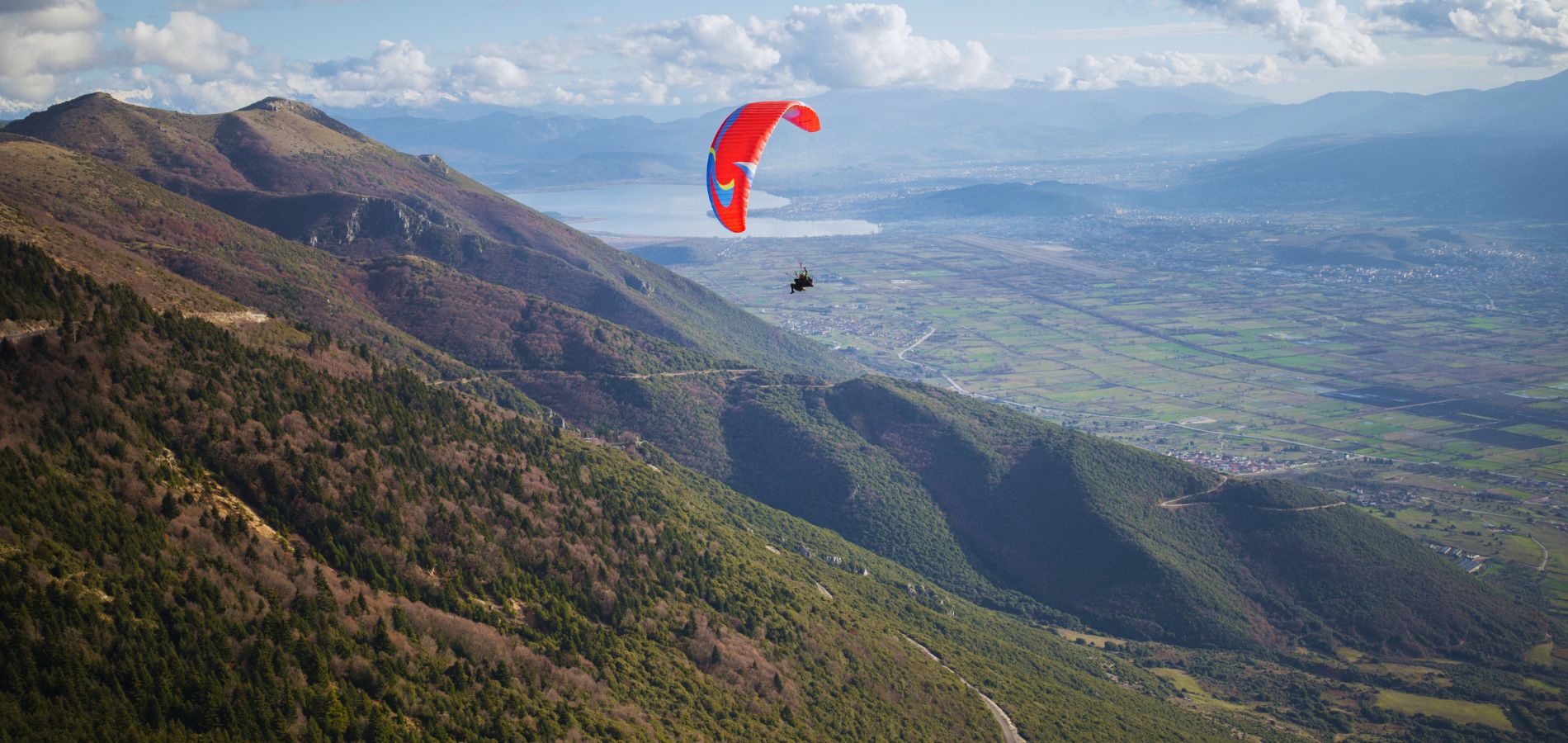
What gives the island its visual power is the contrast between height and water. In several parts of Lefkada, the land rises above the coastline and opens toward wide views of the Ionian Sea.Visitors describe viewpoints from inland routes and higher villages where you can look out across Lefkada, Preveza, and the wider Ionian horizon. In places such as Kalamitsi, the sparkling turquoise water is waiting for you , sandy beaches, and the close relationship between mountain and sea.
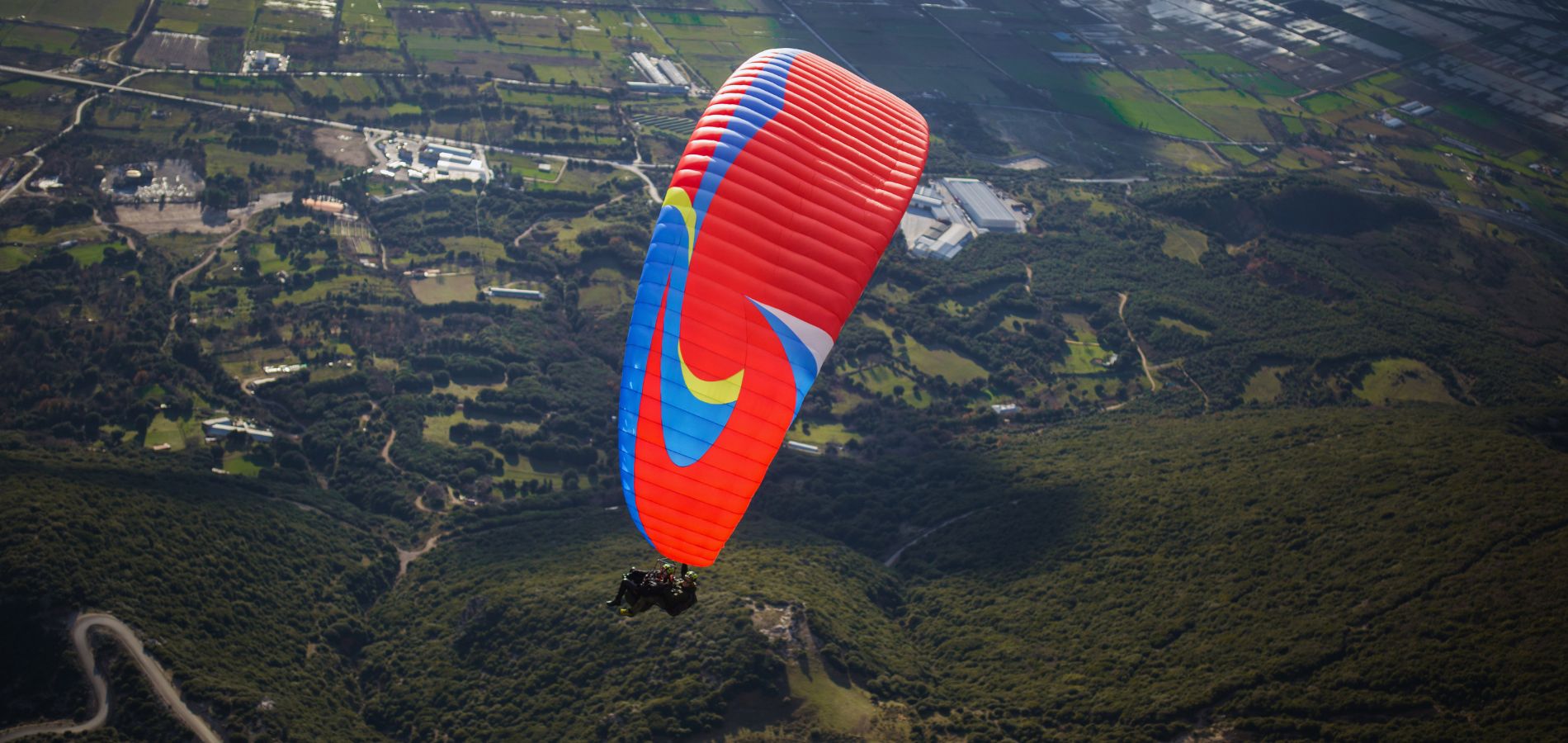
This is why Lefkada feels so naturally suited to a blog story about tandem paragliding. The island already has the kind of landscape that people imagine when they think of western Greece: steep relief, open blue horizon, bright water, and beaches that change color depending on the sun. Visit Greece repeatedly refers to Lefkada’s transparent and exotic waters, and even broader travel features focus on the island’s dramatic west coast, where the light and sea create some of its most iconic views.
Another reason Lefkada works so well in a more narrative blog article is the atmosphere of late afternoon and evening. Official and tourism-oriented references highlight the island’s sunsets, especially along the west coast and around places such as Kathisma, where the sea and sky take on warmer colors toward the end of the day. That changing light is part of Lefkada’s identity: the same landscape can feel bright and vivid at noon, then softer, golden, and more cinematic as the sun drops over the Ionian.
In the end, Lefkada is not just beautiful because it has famous beaches. It is beautiful because it combines accessibility, strong topography, and a very specific palette of colors: deep blue sea, pale cliffs, green hills, and those well-known turquoise waters that have made the island internationally recognizable.